

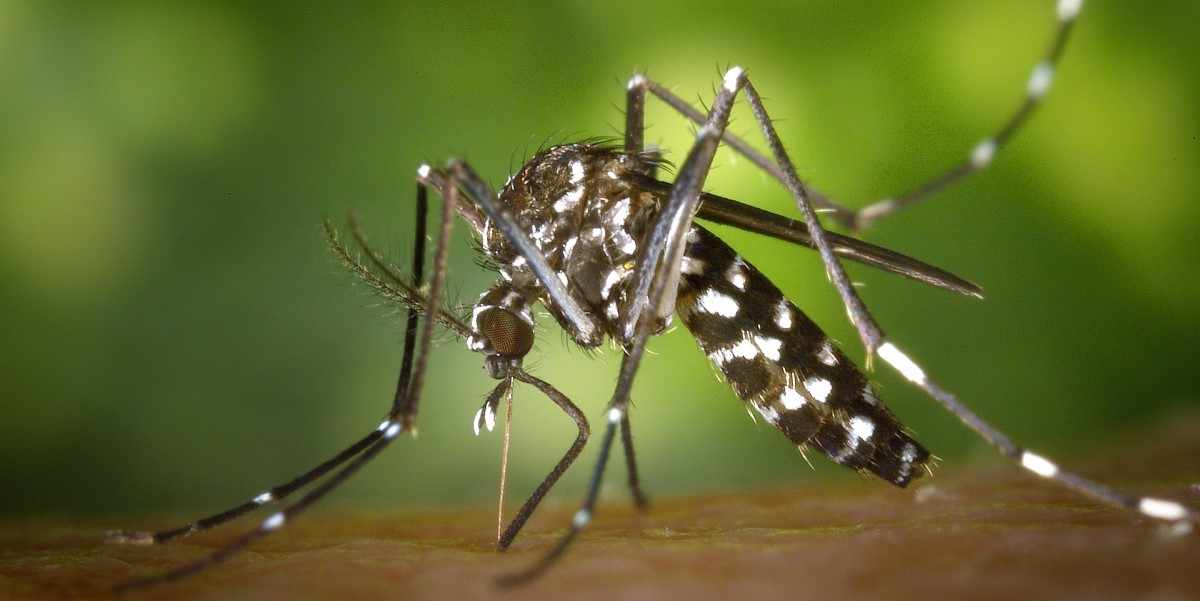
This viral infection occurs in some tropical and subtropical regions of the world, predominantly transmitted through the bite of an infected Aedes mosquito
Key messages
- Chikungunya is a viral infection transmitted through the bite of an infected Aedes mosquito.
- Chikungunya has spread significantly in recent decades and is now a major global health problem.
- Chikungunya is rarely fatal. Symptoms include fever, severe joint and muscle pains, headaches and skin rash which tend to resolve after 1–2 weeks; however long-term joint pain may persist for several months or years.
- Travellers should check if chikungunya is a risk at their destination and reduce their risk of exposure by taking mosquito bite prevention measures.
- Two new vaccines (IXCHIQ® and Vimkunya®) have recently been licensed in the UK. The Joint Committee on Vaccination and Immunisation (JCVI) have published guidance on the use of the vaccines. There is no specific anti-viral treatment for chikungunya.
- As of 16 July 2025, following global reports of serious adverse events in older people, the JCVI advise against the use of IXCHIQ® in adults aged 60 years and older and IXCHIQ® should not be offered to those with is history of thymus disorder or thymectomy as a precautionary measure. This advice will be reviewed again when further safety data is available.
Overview
Chikungunya is a viral infection predominantly transmitted to humans through the bite of an infected Aedes mosquito. The disease occurs in some tropical and subtropical regions of the world and in recent decades has emerged as a major global health problem following increasing international spread. The chikungunya virus (CHIKV) is an alphavirus that was first isolated following an outbreak in Tanzania in the 1950s [1]. The term chikungunya is derived from the Makonde language of Tanzania and means, “that which bends up”, referring to the severe joint pains that occur as part of the infection [2]. Typically, symptoms include fever, joint pain, muscle pain, rash and headache. The disease usually resolves in one to two weeks and is rarely fatal; however, joint pain may persist for months or years [3].
Risk areas
In the latter half of the twentieth century, chikungunya predominantly occurred at relatively low levels in tropical and subtropical regions of Asia and Africa [3]. The mosquitoes responsible for the transmission of CHIKV (Aedes aegypti and Aedes albopictus) have a wide distribution particularly throughout tropical and subtropical areas. In recent years, they have also been found in parts of Europe and the USA.
Infected travellers have the potential to introduce CHIKV to new areas of the globe [4, 5], and in recent decades this potential has been realised with a number of very large international outbreaks affecting millions of people in areas not previously experiencing chikungunya. These outbreaks have occurred in the Indian Ocean islands, India, the Pacific islands, the Caribbean, Central America and South America [3, 6, 7].
Smaller outbreaks have also occurred in temperate Europe in France and Italy [8, 9]. Although these outbreaks were small, they highlight the potential for global spread outside the tropics and subtropics. The likelihood of CHIKV spreading in mainland Europe is high. This is due to importation of the virus via infected travellers returning from endemic countries, the presence of competent vectors in many European countries (particularly around the Mediterranean coast) and population susceptibility [10, 11].
As the risk areas are constantly evolving, travellers visiting countries where chikungunya is known to have occurred, or has the potential to occur, should check the latest information on the Country Information pages prior to travel.
Transmission
CHIKV is mainly spread by the bite of an infected Aedes aegypti or Aedes albopictus mosquito. These mosquitoes are active throughout the day, especially during the hours of highest activity: mid-morning and late afternoon to twilight [11]. Aedes aegypti tend to reside in close proximity to human dwellings in urban areas and often bite indoors [12, 13]; they tend to bite humans rather than animals [5]. Aedes albopictus are active in urban, peri-urban and rural areas, as well as near to forested areas; they bite both indoors and outdoors, but prefer outdoors [12, 13]. Aedes albopictus bite humans and a wide variety of animals, allowing the mosquito to transmit CHIKV between animals and humans.
In Africa, CHIKV is transmitted between Aedes mosquitoes and non-human primates or small mammals in forested areas, creating an animal reservoir [3]. Outbreaks in Africa are frequently associated with heavy rainfall, when mosquito populations increase and spread of CHIKV from animals in forested areas to humans in nearby dwellings is more likely [3, 5]. During epidemics, CHIKV can circulate between human beings and mosquitoes without the need for an animal reservoir. In contrast, transmission in Asia seems to occur predominantly between humans and Aedes mosquitoes in urban locations [3].
Signs and symptoms
It may take between four and eight days for the first symptoms of chikungunya to develop; it can be shorter or longer in some people. Onset of the disease is characterised by sudden onset of high fever, severe arthralgia (joint pains) and myalgia (muscle pains), with associated headaches, photophobia (sensitivity to light) and skin rashes [3]. Some people can be infected with CHIKV without developing symptoms, although this appears to be relatively rare.
Joint pain is commonly the most disabling symptom and tends to affect multiple joints, particularly the extremities (ankles, wrists and hands) [3, 16]. The infection usually resolves after one to two weeks, however in some patients, joint pains may persist for months or even years causing long-term disability [3]. Up to 12 percent of individuals have persistent joint pains after three years [16]. Occasional cases of eye, neurological and heart complications have been reported, as well as gastrointestinal complaints. Serious complications are rare, as are fatalities (approximately one in every 1000 cases). Those at highest risk of dying include young babies, the elderly and adults with underlying health problems [3].
Diagnosis and treatment
CHIKV infection is suspected when typical clinical symptoms occur in a person who has visited or resided in a known risk area, particularly when an outbreak is on-going. The diagnosis can be confirmed by detecting the presence of the virus or antibodies to the virus in the patient’s blood. In the UK, appropriate samples from suspected cases should be sent, along with a full clinical and travel history with relevant dates, to the UK Health Security Agency Rare and Imported Pathogens Laboratory.
No specific antiviral treatment is currently recommended and patients are treated with rest, hydration and medications for pain and fever. Nonsteroidal anti-inflammatory drugs may be helpful in alleviating symptoms.
Preventing chikungunya
Health professionals should be aware of where CHIKV outbreaks are occurring to enable appropriate pre-travel counselling. Travellers should seek advice from a health professional prior to travel and may reduce the risk of acquiring chikungunya by taking bite prevention measures. Particular vigilance with bite precautions should be taken around dawn and dusk. If possible natural or man-made water filled containers, which may act as mosquito-breeding sites, should be removed.
Vaccine information
Two new vaccines have recently been approved for use in the UK, the European Union, and the USA. IXCHIQ® is a live vaccine, approved in the UK in February 2025 for individuals 18 years and older*. Vimkunya® is a virus like particle vaccine approved in the UK in May 2025 for individuals 12 years and older.
*See Joint Committee on Vaccination and Immunisation (JCVI) advice on age groups for the vaccine below
IXCHIQ® and Vimkunya® vaccines have been reviewed by the Joint Committee on Vaccination and Immunisation (JCVI) and guidance will be drafted for the UKHSA ‘green book’ Immunisation against infectious disease. Health professionals offering this vaccine must ensure they are adequately informed on the use of the vaccine.
As of 9 June 2025, global data has highlighted 23 cases of serious adverse events in individuals 62 to 89 years of age who received IXCHIQ® during post marketing use [17]. Two of the cases reported a fatal outcome. Many of the people affected also had other illnesses and the exact cause of these adverse events and their relationship with the vaccine have not yet been determined [18].
The UK government independent expert advisory body, the Commission on Human Medicines (CHM) has temporarily restricted the use of IXCHIQ® in those people aged 65 years and over. This is a precautionary measure while the Medicines and Healthcare products Regulatory Agency (MHRA) conducts a safety review.
As of 16 July 2025, JCVI has considered these reports as part of their review. In addition to bite avoidance measures, chikungunya vaccine may be considered for:
- those travelling to regions with active CHIKV outbreaks
- long term or frequent travellers to regions with CHIKV transmission in the past 5 years*
- laboratory staff working with CHIKV
*UK Health Security Agency and NaTHNaC have reviewed chikungunya epidemiology and the recommendations for individual countries are available on TravelHealthPro Country Information pages.
When vaccination is considered to be indicated, JCVI advises:
- Vimkunya® vaccine may be offered to individuals aged 12 years old and over
- IXCHIQ® vaccine may be offered to immunocompetent individuals aged 18 to 59 years old
Currently there is no evidence of a safety signal with the use of Vimkunya® in older adults. The JCVI did not consider it necessary to restrict the use of Vimkunya® at this time but note that this vaccine has not been used extensively [19].
Table 1: chikungunya vaccines schedule and JCVI recommended age range
The JCVI current advice against the use of IXCHIQ® live attenuated chikungunya vaccine in adults aged 60 years and older is precautionary and will be reviewed when further safety data is available. This approach was based on the report of an individual aged 62 years experiencing serious adverse effects, and an opportunity to align operationally with current advice on caution on the use of yellow fever vaccine in individuals aged 60 years and older.
In order to further align the yellow fever vaccine and IXCHIQ® advice, JCVI also advises that the IXCHIQ® vaccine should not be offered to individuals with a history of thymus disorder or thymectomy.
Currently there is no evidence of a safety signal with the use of Vimkunya® in older adults. The JCVI did not consider it necessary to restrict the use of Vimkunya® at this time but note that this vaccine has not been used extensively [19].
Table 1: chikungunya vaccines schedule and JCVI recommended age range
| Vaccine | Schedule | Length of protection | Age range |
| IXCHIQ® (live attenuated vaccine) Valneva |
Single 0.5ml dose given IM | The need for revaccination has not been established | 18–59 years* |
| Vimkunya® (non-replicating virus particle vaccine) Bavarian Nordic |
Single 0.8ml dose given IM | The need for revaccination has not been established | ≥12 years |