As international travel continues to increase, more UK travellers are visiting destinations where rabies remains a real and potentially life-threatening risk. While many people focus on passports, flights and accommodation, travel health is often overlooked until the final stages of planning. In the case of rabies, leaving vaccination too late can create unnecessary risk.
Rabies is a viral infection that affects the brain and nervous system. Once symptoms begin to develop, the disease is almost always fatal. Although rabies is not present in the UK’s domestic animal population, it remains widespread in many parts of the world and continues to cause tens of thousands of deaths globally every year.

Travel health specialists have long advised that travellers heading to certain regions should consider vaccination well in advance of departure.

Where Rabies Is Still a Risk

Rabies is most commonly transmitted through the bite or scratch of an infected animal. Dogs are responsible for the majority of human cases worldwide, but the virus can also be carried by monkeys, bats, cats and other mammals

Travellers often encounter animals in everyday situations while abroad, including:

  • visiting temples or tourist attractions where monkeys roam freely
  • trekking or travelling through rural areas
  • volunteering with animals
  • encountering stray dogs in towns and villages
  • staying in locations where medical facilities are limited

Many exposures occur when travellers try to feed or interact with animals. Even minor scratches can be enough to transmit the virus if saliva from an infected animal enters broken skin.

One of the challenges with rabies is that symptoms may take weeks or months to appear after exposure. Once they develop, the disease progresses rapidly and is almost always fatal.

Why Pre-Travel Vaccination Is Important

Rabies vaccination before travel provides important protection for those visiting high-risk areas. While vaccination does not remove the need for medical care after a bite or scratch, it significantly simplifies the treatment required.

Without prior vaccination, someone exposed to rabies may require rabies immunoglobulin as part of emergency treatment. In many parts of the world this medication is extremely difficult to access, particularly outside major cities.

Travellers who have already received the rabies vaccine require a much simpler course of follow-up treatment, which is more widely available internationally.

For people travelling to remote areas, spending extended periods abroad, or working with animals, vaccination is often strongly recommended.

Who Should Consider the Rabies Vaccine?

Rabies vaccination is commonly recommended for travellers who are:

  • visiting countries where rabies is widespread
  • spending time in rural or remote areas
  • backpacking or travelling long-term
  • working or volunteering with animals
  • travelling to destinations where access to medical care may be limited

Families travelling with children should also be aware that children are more likely to interact with animals and may not report small scratches or bites.

A travel health consultation helps determine whether vaccination is appropriate based on destination, planned activities and length of stay.

Current Vaccine Supply Challenges

In recent months there have been reports of limited availability of certain travel vaccines across parts of the UK, including rabies vaccination in some settings. Supply pressures can occur from time to time due to global manufacturing demand and distribution factors.

Specialist travel clinics monitor vaccine availability closely to ensure patients can access recommended protection before travelling.

At Regent Street Clinic, rabies vaccination continues to be available across its network of clinics, allowing travellers to access the vaccine as part of a full travel health consultation.

Planning Ahead Before You Travel

Travel medicine is most effective when planned early. Ideally, travellers should seek advice several weeks before departure to allow time for vaccination schedules and personalised travel health advice.

During a consultation, clinicians can review:

  • destination-specific risks
  • planned activities and travel itinerary
  • recommended vaccinations and preventative measures
  • guidance on what to do if an animal exposure occurs abroad

This tailored approach helps ensure travellers are properly prepared and protected before their journey begins.

A Preventable Risk

Rabies remains one of the world’s most serious infectious diseases, yet it is also one of the most preventable when appropriate precautions are taken. Awareness of the risks, avoiding contact with unfamiliar animals and receiving vaccination where recommended can dramatically reduce the chances of a serious exposure.

For travellers heading to destinations where rabies is present, seeking professional travel health advice before departure is an important step in ensuring a safe and healthy trip.

Regent Street Clinic has expanded its London footprint with the opening of two new central locations in Bank and Oxford Circus. The move strengthens our presence in the capital and reflects sustained demand for structured, clinically governed private healthcare in high-density commercial districts.

Both clinics deliver the full scope of services available across our UK network — including private GP appointments, occupational health provision, travel medicine, visa medicals and preventative health assessments. Every consultation operates within our established clinician-led framework, built around governance, regulatory compliance and clear medical accountability.

This expansion comes at a time of transition within the private healthcare and travel health sectors. Recent market exits have created uncertainty for both employers and patients. Our entry into Bank and Oxford Circus provides stability — a fully regulated, nationally integrated provider offering continuity in two of London’s most commercially significant locations.

Bank: Healthcare Embedded in the Financial Core

Our Bank clinic positions Regent Street Clinic directly within the City’s financial and professional services ecosystem. For employers operating in high-performance environments, access to responsive, local healthcare is not a convenience — it is an operational necessity.

Occupational health assessments, management referrals, executive medicals and fitness-to-work reviews can now be delivered within walking distance of the workplace, reducing downtime and improving response times. Internationally mobile professionals benefit from immediate access to travel vaccinations and visa medicals without the inefficiencies of cross-city appointments.

The clinic has been developed to meet the expectations of organisations that prioritise discretion, speed and clinical rigour — whether through one-off assessments or structured, ongoing occupational health programmes.

Oxford Circus: Centralised Access in the West End

Our Oxford Circus location broadens accessibility across the West End and surrounding residential districts. It serves individuals, families, retailers, hospitality businesses and commuters seeking reliable private medical care in a well-connected central setting.

Patients can secure same-week GP appointments, undertake health screening, prepare for overseas travel or address ongoing health concerns without long waiting times or fragmented service pathways.

In central London, accessibility drives healthcare behaviour. The ability to book online and attend a centrally located clinic before or after work materially reduces friction and encourages earlier intervention — improving health outcomes and reducing preventable escalation.

A Consistent National Governance Model

Regent Street Clinic was founded by Dr Bobby Ahmed, a UK-trained General Practitioner with additional qualifications in Occupational Medicine and Travel Medicine. The organisation has been built on a consultation-led model prioritising structured assessment, professional standards and regulatory oversight.

The Bank and Oxford Circus clinics operate under the same governance systems as our established national network. Clinical records, reporting standards and compliance processes remain consistent across locations, ensuring continuity of care while responding to the specific operational dynamics of central London.

Strengthening London’s Private Healthcare Infrastructure

The addition of two full-service clinics reflects sustained market demand for dependable, well-governed private healthcare provision.

For City employers reviewing occupational health partners, for globally mobile professionals requiring reliable travel medical support, and for individuals seeking timely GP access, Regent Street Clinic now provides expanded, strategically located options within central London.

Appointments at both locations are now open.

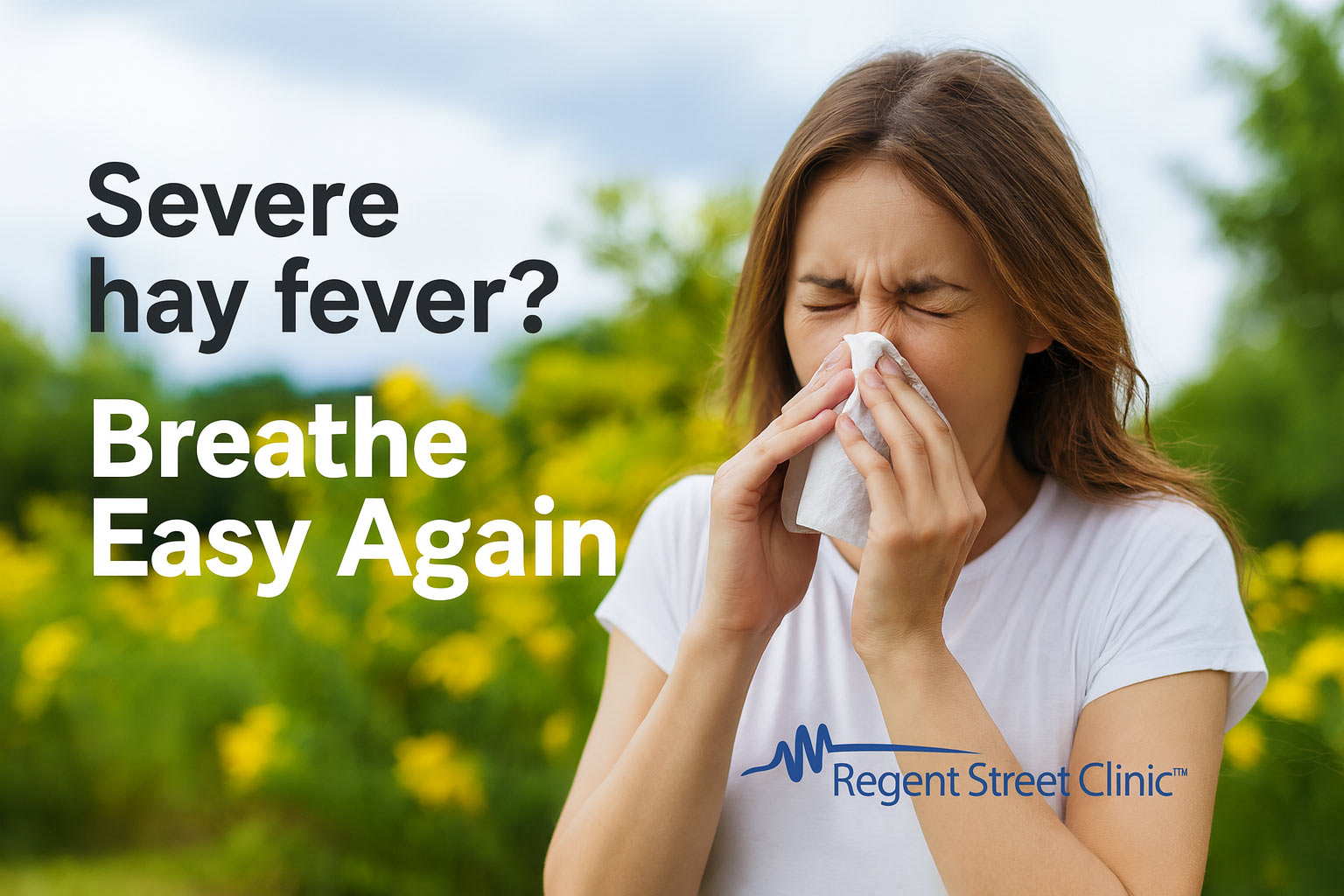
Spring and summer should be the best time of year — longer days, warmer weather, and more time outdoors. But for millions of people across the UK, it also means sneezing fits, itchy eyes, and constant congestion. For some, hay fever is a mild seasonal annoyance. For others, it disrupts sleep, concentration, work, and everyday comfort.

At Regent Street Clinic, we see just how much seasonal allergies can affect quality of life. We have the solution — a structured, consultation-led approach designed to help people regain control of their symptoms in a safe, personalised way.

Why Hay Fever Can Be So Disruptive

Hay fever (seasonal allergic rhinitis) is caused by the immune system reacting to pollen from trees, grasses, and weeds. This reaction releases histamine, leading to common symptoms such as:

  • Sneezing
  • Runny or blocked nose
  • Itchy, red, or watery eyes
  • Sinus pressure
  • Fatigue and poor sleep

For some people, symptoms are manageable. For others, they can last for months and affect productivity, mood, and daily life.

Symptoms often feel harder to control when:

  • Pollen counts stay high for long periods
  • Pollution or environmental triggers make reactions worse
  • Pharmacy treatments don’t provide enough relief
  • Symptoms change or intensify as the season progresses

Because hay fever affects everyone differently, finding the right way to manage it isn’t always straightforward.

Starting with the Basics

Many people manage symptoms successfully with simple steps and pharmacy-based options. Small lifestyle adjustments can make a noticeable difference:

  • Checking pollen forecasts before planning outdoor activities
  • Keeping windows closed during high pollen periods
  • Showering after being outside to remove pollen from hair and skin
  • Using antihistamines or eye drops where appropriate

For some, these measures are enough. But for others, symptoms continue to return year after year, sometimes getting worse over time.

This is usually when people start looking for something more structured and supportive. We have the solution — beginning with proper clinical assessment and personalised guidance.

The Regent Street Clinic Approach

At Regent Street Clinic, hay fever support always starts with a consultation. Rather than assuming what might work, our clinicians take the time to understand the full picture.

During your appointment, we will:

  • Review your symptoms and how they affect your daily life
  • Discuss what you’ve already tried and whether it helped
  • Identify likely triggers and seasonal patterns
  • Consider whether current measures have been fully optimised

From there, we can talk through appropriate next steps based on your individual needs, medical history, and previous responses to treatment.

This consultation-led approach ensures care remains safe, proportionate, and tailored. Not everyone needs advanced management, and in many cases, reassurance and simple adjustments are enough. Where further support is appropriate, options can be explored following clinical assessment.

Who Might Benefit from a Clinical Review?

A consultation can be particularly helpful if:

  • Symptoms return every year and feel harder to manage
  • Over-the-counter options no longer seem as effective
  • Sleep is affected by congestion or irritation
  • Hay fever is impacting focus, work, or day-to-day comfort
  • Symptoms feel more intense or last longer than before

Even if symptoms have been present for years, they can change over time. A fresh assessment often helps people understand their triggers better and manage the season more comfortably.

Practical Ways to Reduce Pollen Exposure

Alongside clinical guidance, small everyday habits can help limit exposure:

  • Wear sunglasses outdoors to reduce pollen reaching the eyes
  • Change clothes after spending time outside
  • Wash bedding regularly during peak pollen months
  • Keep pets out of bedrooms during high pollen days
  • Track local pollen counts using weather apps

These simple steps can complement a personalised management plan and help reduce the day-to-day impact of symptoms.

Hay Fever Support Across Our UK Clinics

Regent Street Clinic offers consultation-led hay fever support across multiple UK locations, making it easy to access professional advice during allergy season.

Many patients come to us after searching for help when pharmacy options haven’t given enough relief. Our focus is always on understanding the individual first and guiding them towards the most suitable way to manage their symptoms.

We have the solution — not a one-size-fits-all answer, but a structured, clinician-led approach that puts the patient at the centre of care.

Appointments can be booked online or by contacting your nearest clinic.

Frequently Asked Questions

When should I seek medical advice for hay fever?
If symptoms are persistent, worsening, or starting to affect sleep, work, or daily life, a clinical assessment can help you understand your options.

Do I need a referral?
No referral is usually required. You can book a consultation directly.

Are medical treatments suitable for everyone?
Suitability depends on individual factors such as symptom severity, medical history, and previous treatment responses. Any recommendations are made following clinical review.

Can hay fever change over time?
Yes. Symptoms, triggers, and how the body reacts can vary from season to season, which is why reassessment can be useful.

Take Control This Allergy Season

Hay fever might be common, but that doesn’t mean you have to simply put up with it every year. With the right guidance and a personalised plan, many people can significantly reduce how much symptoms interfere with daily life.

At Regent Street Clinic, we have the solution — expert assessment, tailored support, and a focus on helping you stay comfortable throughout the season.

To learn more or to book a consultation, visit the Regent Street Clinic website and explore the services available at your nearest location

Clinician Review & Authority Statement

This article has been reviewed and approved by Dr Bobby Ahmed, Medical Director and CEO of Regent Street Clinic. Dr Ahmed is a UK-trained General Practitioner, Member of the Royal College of General Practitioners (MRCGP), and holds additional qualifications in Occupational Medicine and Travel Medicine. He has overseen the development of Regent Street Clinic’s consultation-led services across multiple locations, prioritising patient-centred care.

Information provided here reflects current UK clinical guidance on seasonal allergic rhinitis. Treatment suitability and outcomes vary between individuals, and all care is delivered following clinical assessment.

Every spring and summer, thousands of people across the UK struggle with severe hay fever.From constant sneezing and blocked sinuses to itchy eyes, poor sleep and even breathing problems.

For many people, antihistamines and nasal sprays work well. But for others, symptoms remain persistent, exhausting and disruptive to daily life.

If you’re wondering whether stronger treatments, including hay fever injections might help, this guide explains the facts, myths, pros and cons, and how to decide what’s right for you.


Why does hay fever seem worse every year?

Patients across the UK are reporting:

  • Longer pollen seasons
  • Higher pollen counts
  • More severe symptoms
  • Increased wheeze or chest tightness

Environmental changes, pollution and warmer weather mean pollen exposure is higher than ever, and many people find standard tablets no longer provide enough relief.


What are the symptoms of severe hay fever?

You may have moderate to severe hay fever if you experience:

  • Constant sneezing
  • Blocked or runny nose
  • Itchy or watery eyes
  • Skin flare-ups
  • Poor sleep
  • Fatigue or “brain fog”
  • Wheezing or chest tightness

Respiratory symptoms are especially important to assess, as hay fever can worsen asthma-type symptoms.


Myth vs Fact: Clearing up common hay fever misunderstandings


“Hay fever is just a mild allergy”

Fact:
For some people it significantly impacts sleep, work, and quality of life.


“Antihistamines work for everyone”

Fact:
Many patients continue to struggle despite tablets and sprays. Stronger options may sometimes be needed.


“Hay fever injections are unsafe or banned”

Fact:
Seasonal corticosteroid injections are licensed prescription medicines that may be offered by experienced clinicians for suitable patients. They are not appropriate for everyone, but can be effective when used carefully and responsibly. Medical assessment is essential.


What treatments are available for severe hay fever?

Treatment should always be personalised. Options may include:

  • Antihistamines
  • Nasal steroid sprays
  • Eye drops
  • Allergy testing
  • Immunotherapy referral
  • Prescription medications
  • Seasonal corticosteroid injection (hay fever injection) for selected patients


Hay fever injections: pros and cons

If you’re considering this treatment, it’s important to understand both sides.


Benefits may include:

✔ Reduced inflammation
✔ Relief from severe nasal and eye symptoms
✔ Improvement in breathing-related symptoms
✔ Convenient single seasonal treatment
✔ Better sleep and daily functioning

Considerations:

✖ Not suitable for mild hay fever
✖ Not recommended for everyone
✖ Requires clinician assessment
✖ Possible side effects
✖ Certain medical conditions may exclude use


Who might benefit from a hay fever injection?

You may wish to seek advice if:

  • Tablets aren’t working
  • Symptoms return every year
  • You struggle to sleep
  • Work or school is affected
  • You experience wheeze or chest tightness
  • You’ve tried multiple medications without success


Our approach at Regent Street Clinic™

For over 20 years, our clinicians have helped patients across the UK manage moderate to severe hay fever safely.

We focus on:

  • Free clinical consultations
  • Individual assessment
  • Evidence-based treatments
  • Clear explanation of pros and cons
  • Only recommending injections when clinically appropriate


Many patients simply need optimised medication. Others may benefit from additional treatment options.


Frequently asked questions

Hay Fever Injection Treatment

When prescribed by experienced clinicians after assessment, they can be safe and effective for suitable patients.
No. They manage inflammation and symptoms for the season.
No. Suitability depends on medical history and symptom severity.
Yes – we always assess before treatment.
If hay fever is affecting your sleep, work or breathing, speak to one of our clinicians.

Available at all clinics across the UK.

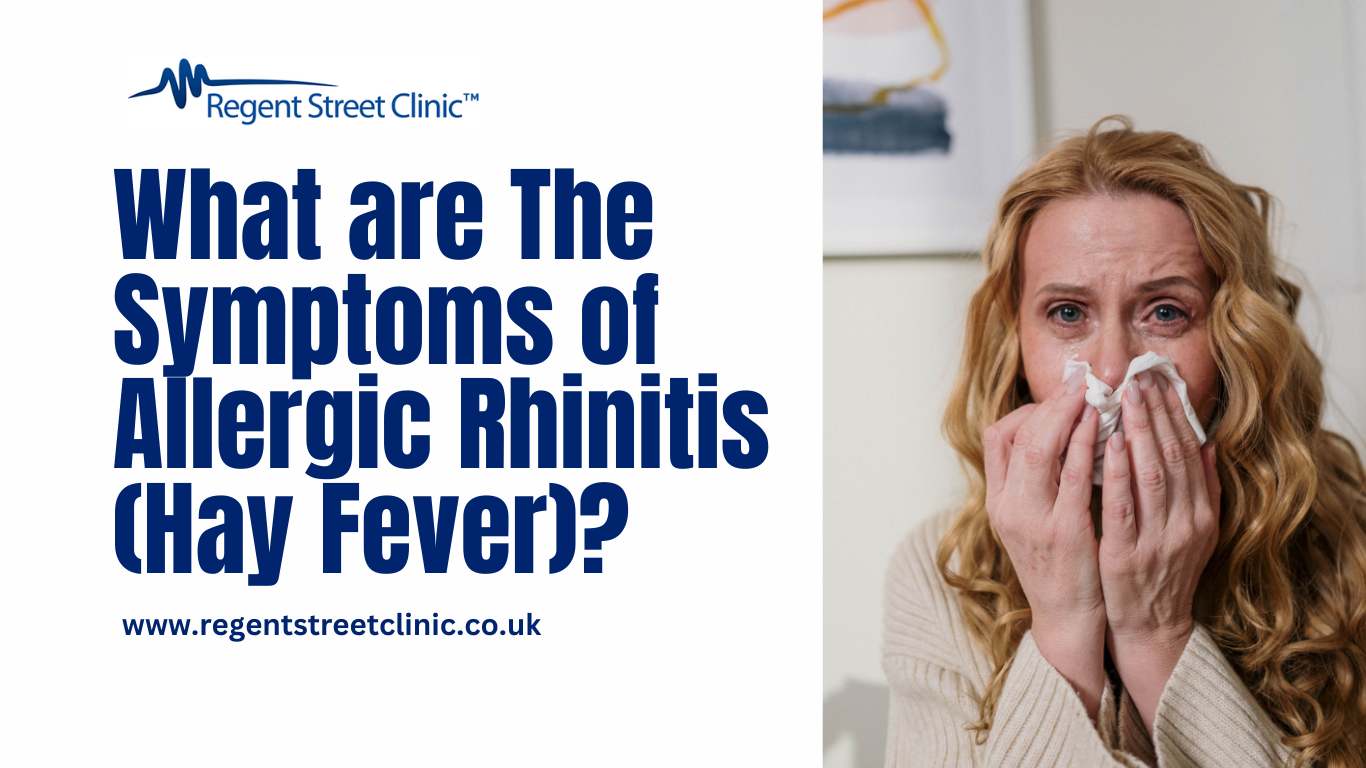
What are The Symptoms of Allergic Rhinitis (Hay Fever)

Hay fever, also known as seasonal allergic rhinitis, is a common condition that affects millions of people around the world. Hay fever season typically refers to the period of time when the pollen count is high and triggers allergic reactions in people who are sensitive to it.

Allergic Rhinitis

The timing and severity of hay fever season can vary depending on the location and the types of plants that are growing in the area. In general, hay fever season starts in the spring when trees begin to release pollen into the air. This is followed by the summer months when grasses and weeds release their pollen. Hay fever season typically ends in the fall when the weather turns colder and the pollen count drops.


Typically, hay fever symptoms can include:


Sneezing: People with hay fever may experience frequent bouts of sneezing, often in rapid succession.


Runny or stuffy nose: A runny or stuffy nose is a common symptom of hay fever. The nose may be congested or runny, and it may be difficult to breathe through the nose.


Itchy or watery eyes: Hay fever can cause the eyes to become itchy, red, and watery.


Scratchy throat: Some people with hay fever may experience a scratchy or sore throat.


Fatigue: The body’s immune response to allergens can cause fatigue, making it difficult to concentrate or perform daily tasks.


Headaches: Some people with hay fever may experience headaches due to sinus pressure or congestion.


Cough: A dry cough may be present due to postnasal drip.


Hay fever symptoms can range from mild to severe and can significantly impact a person’s quality of life. It’s important to note that while hay fever can be uncomfortable, it is not usually life-threatening. However, in rare cases, hay fever can trigger asthma attacks or lead to sinus infections.


To manage hay fever symptoms, people can take over-the-counter antihistamines, nasal sprays, and eye drops. They can also avoid going outside during peak pollen times, keep windows closed to prevent pollen from entering the house, and wear a mask while outdoors. In severe cases, a doctor may prescribe stronger medications or allergy shots to help alleviate symptoms.


doc

The effectiveness of hay fever treatment can vary from person to person; However, studies have shown that different options available for the treatment can be effective in reducing symptoms, improving quality of life, and reducing the need for medication in some people.


To book your appointment online

As you age, fine lines and wrinkles may appear on your face. Over time, your eyes may appear sunken and lose their sparkle. Such problems are more common among people with a very demanding lifestyle. Horrible sleep schedules, smoking and eating processed foods can cause premature ageing, swelling and under eye bags.

Facial aesthetic treatments

Luckily, science has progressed enough to gift the world with facial aesthetics, a branch of non-surgical treatments, which guarantee immediate results. Relying on injectable fillers and solutions, such as Hyaluronic Acid, these procedures tighten up the face, lift up the features and effectively remove crow’s feet and deep lines from your face.

What Are Facial Aesthetics?

Facial Aesthetics are a treatment to rejuvenate your skin and to give your face a more youthful look. These have a short post recovery period, are minimally invasive and give natural-looking results. Patients can achieve a desired appearance without undergoing surgeries that last up to twelve months.

anti-wrinkle treatments

Facial aesthetic treatments include anti-wrinkle treatments, which make use of dissolvable dermal fillers, like hyaluronic acid, or neurotoxin proteins, like Botulinum Toxin. These treatments also include lip fillers, cheek fillers, chemical peels, Profhilo, Dermaplaning and more.


Studies state that facial aesthetic treatments positively affect the self-esteem and self-confidence of users. These also enhance the appearance by :

Reducing Wrinkles

Whether you smile or frown, facial movements are bound to contribute to fine lines on the face. Wrinkles do not emerge suddenly, but creep in slowly.  Laugh lines, crow’s feet, chin wrinkles and extra creases above and around the eyelids only deepen with time.


Early treatments with facial aesthetics reduce the appearance of such creases and bring back your youthful radiance. By relaxing the facial muscles or plumping the creases with fillers, you can improve the appearance of facial wrinkles.

anti-ageing facial aesthetics

Removing Dark circles

Apart from ageing, the stress of hectic life, busy schedules and the lack of sleep can worsen your skin and lead to dark circles. Eye bags and dark circles are just some of the signs. With age, the tissues around the eyes sink too, creating blue-ish hollows under your eyes.


Dermal fillers, injected around the tear trough, plump up the area, reduce the appearance of sinking eyes and soften the look of hollows. The result is radiant and glowing skin, free from signs of exhaustion and aging.

Lip fillers

Plumping Thin lips

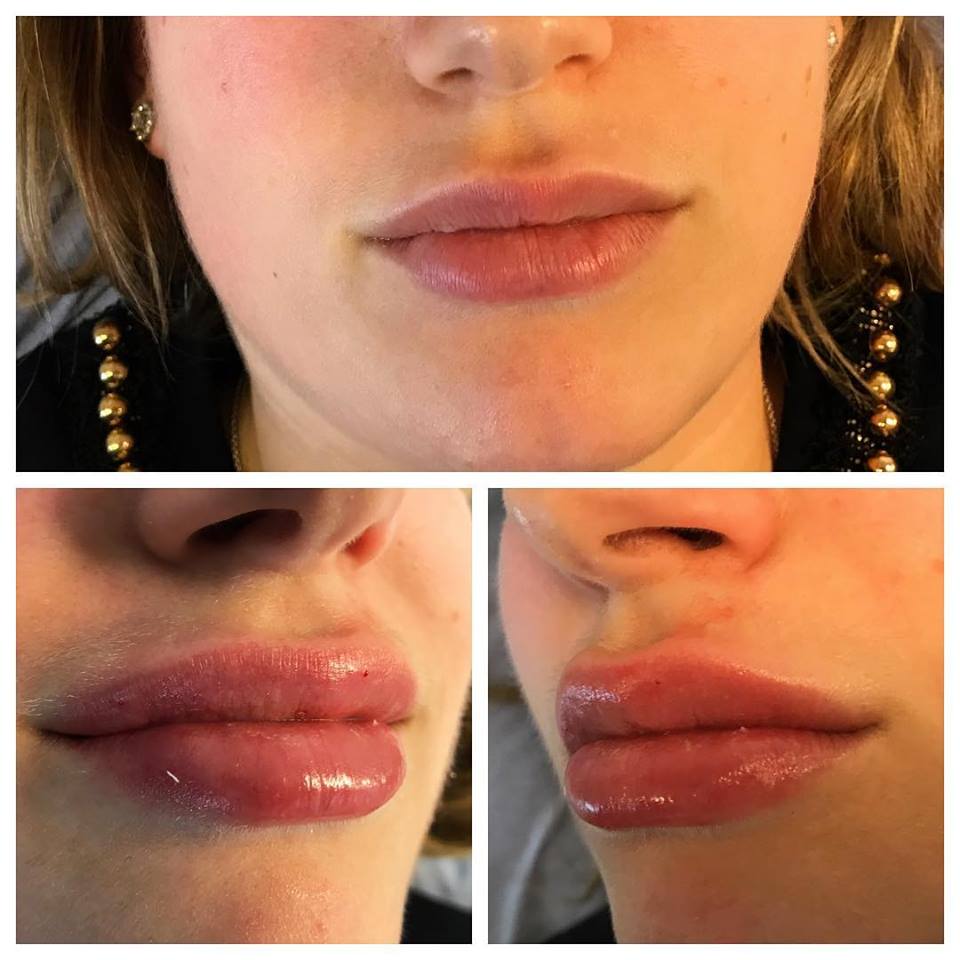
As your collagen levels deplete over time, lip volume reduces. Lip fillers are a quick and non-invasive aesthetic treatment that enhances the plumpness of lips. Dissolvable fillers, such as Hyaluronic Acid, are injected into the lips, which result in fuller and shapely-looking lips. The best part is that the results of the treatment can last for months.


Facial Aesthetics provide a convenient solution to restore your youthful look without undergoing any surgical procedures. Additionally, the treatments are dissolvable in case you opt to change your appearance again.


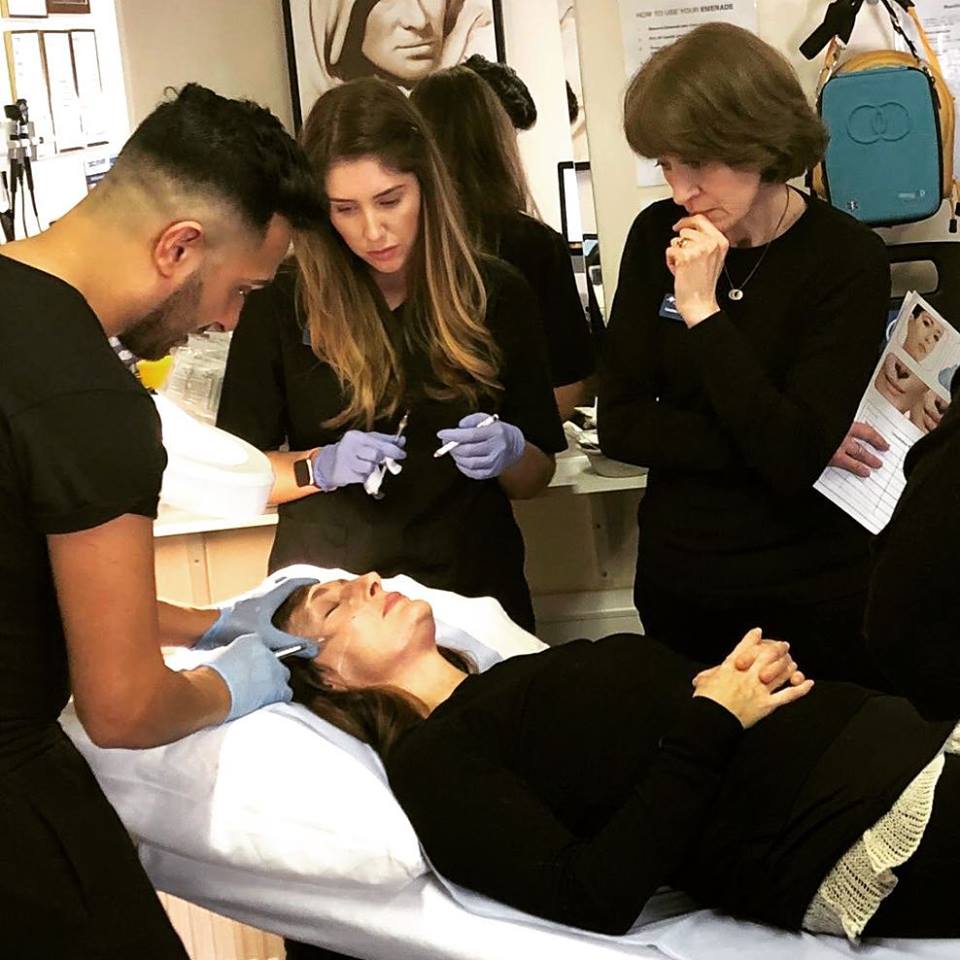
If you have decided to get a Facial Aesthetic treatment, a procedure from trained and qualified aestheticians guarantees satisfying results.


 At Regent Street Clinic, we opt for natural-looking results. We also offer free facial assessments and discuss potential treatments that are most suitable for you. Contact Regent Street Clinic™ today to kick-start your rejuvenation journey.

Looking for a discreet and satisfying walk-in private GP service? Look no further than the Regent Street Clinic for all your GP appointment needs.


Our team of private GPs and nurses includes both male and female clinicians who understand that when it comes to your health, there are times when you just need to address your health concern or worry as soon as possible and without delay.


Same Day Private GP Appointments


Most patients prefer same-day private gp services, simply because of the convenience, privacy and quality they offer. At Regent Street Clinic™, we offer patients the chance to get diagnosed and receive faster solutions without worrying about confidentiality.


The Regent Street Clinic™ was established in 1998 and has clinics in Nottingham and Sheffield. It provides services 6 days a week till 6PM. Generally, the process is simple and requires no advance appointments.


Why Choose Same-Day Private GP Services With Regent Street Clinic?


·        Privacy

When you opt for our services, including screenings, diagnosis, tests, treatments and more, you don’t have to worry about confidentiality. Besides this, the patients have the option to seek treatments with utmost privacy and in the quickest way possible by a doctor they deem best to handle their case.


·        Prompt service

Patients at Regent Street Clinic™ receive necessary care without having to wait for days. The care is provided on immediate basis by doctors who have vast experience of handling various conditions. Doctors and health professionals provide sufficient time for a thorough diagnosis and offer a proper follow up in a personalized environment.


·        Excellent Care

Most Private GP have NHS experience and adhere to industry standards. Hence, the end-result is a smooth, seamless and adequately fast service with a doctor who knows how to offer services in a comfortable environment.


Private GP Clinic

What does Regent Street Clinic™ Offer?


Our medical services are of high quality and personalized for a comfortable experience. Our same-day Private GP services are suitable to treat medical conditions that require immediate treatment.  Besides this, our services are ideal for gathering professional opinions.


The array of services offered at Regent Street clinic™ include, but are not limited to, detoxification services, hay fever injections, and cervical smearing tests. Besides this, we also address patients’ general health concerns and carry out urine analyses, blood screenings, and more. Because we want the best for our patients, we try our best to provide the test results within two to three working days.


For those tired of signs of aging, our clinic also offers non-invasive medical aesthetics for a natural-looking, youthful glow. If you are planning a vacation and need to keep your loved ones safe, our travel medicine and vaccinations can keep you safe.


When you need fast medical assistance at affordable prices, the Regent Street Clinic never fails to deliver.

Not sure if you’re suffering from hay fever or have the common cold? Take a closer look at the differences between the two conditions here.


A major reason why people delay getting a hay fever treatment is that they’re not sure whether they even have hay fever. Most people often mistake it for a cold and try to work through their symptoms. However, if you actually have hay fever, this approach can cause you a lot of discomfort.


Not only are flu shots and hay fever treatment is different; the medication and treatment for both these conditions differ as well based on the differences in the conditions. The good news though is that if you are careful, you can actually notice them.


Hay Fever Injections


To help you out, we’re listing down some areas which can help to highlight the differences between the common cold and hay fever:


The Duration


One easy way to distinguish between hay fever and the common cold is by looking at the duration of your symptoms. On average, the common cold lasts for anywhere from 3 to 14 days. It’s extremely rare for colds to exceed 14 days.


However, hay fever can last anywhere from days to months. As long as the person is near the allergens such as pollen, dust, and pollution, the symptoms will stay. They can even last for a short time after you’re away from the allergens.


When It Starts to Happen


The common cold and hay fever are both seasonal, but you have to notice the seasons they start in. As a general rule, the cold usually happens in colder months or when it’s raining. That’s why it happens most commonly in winter, but it can happen at any time of the year, too.


In contrast, hay fever will always start anywhere from early spring until the end of summer. It’s linked with pollen being released from plants, weeds, and even trees. Some people who are particularly sensitive might experience hay fever at any time of the year caused by dust and pollution, but this is not common.


Hay Fever Injections UK

How the Symptoms Start to Appear


It’s also a good idea to note how the symptoms start to appear. The common cold is caused by a virus so it can take a day or two before you start to get a runny nose. It’s very rare that a person will start to sneeze, cough, or experience any other symptoms immediately.


On the other hand, hay fever has a very high likelihood of starting as soon as you come in contact with the allergens. Symptoms will not only start immediately but also grow in severity over the days.

Hay Fever


Most people often assume that hay fever is caused by a weak immune system, and they will eventually grow out of it. However, only 10% to 20% of people manage to do that. For the rest, hay fever is something that they experience throughout their life.


That’s why it’s a good idea to get the advise of a physician.


Get in touch with Regent Street Clinic™. Their team of medical specialists can help you get the right treatment and answer any questions you might have.

Regent Street clinics™ are located in Nottingham, Sheffield, Leicester, Birmingham, Derby, West Yorkshire and Liverpool, providing a full range of private GP health care services for all your needs.


Regent Street Clinic™


We understand that your busy lives need medical services at your convenience. This is why Regent Street Clinic™ is open 6 days a week. Our opening hours are Monday to Friday from 8am to 5pm and Saturday from 9am to 12 noon. We do not offer out of hours facilities; however, we do offer a same day private GP service. We are here to meet your needs and our times are designed to suit most patients. If you need to see a private GP don’t hesitate to book an appointment.


Private Clinic

Our high quality private services include: sexual health testing, health screening, a full range of medical facial aesthetics treatments and travel vaccinations. Our services extend beyond these to provide: laboratory investigations, private blood tests, X-rays, CT/MRI scans, ultrasound scans, OGUK (offshore) medicals and occupational health for companies. It is our aim and belief to give our patients a comprehensive service to meet all your healthcare requirements.


Our philosophy is to be available when our clients need us. Our experienced professional team see around 40,000 patients each year in our private clinics. For over twenty years, Regent Street Clinic™ has cared for and treated over half a million patients. This makes us one of the most experienced private medical facilities in the UK. We have used our extensive knowledge and background to provide an exceptional level of private healthcare service whatever your needs.


Regent Street Clinic™ is there to meet your healthcare needs. We do not seek to replace the NHS GP provision. In fact, we consider the NHS model to be admirable and we endeavour to work in harmony with it. Our ethos is to endeavour to be a patient centred organisation. We care about your opinion and all our private GP practitioners will treat you with respect and dignity. Likewise, we value your feedback as we continually strive to improve, enhance and refine all that we offer. With over 20 years in private healthcare, Regent Street Clinic™ has an established and dependable reputation.